
How Indoor Cats Can Catch Infections: Hidden Risks Many Owners Do Not Think About
Even a cat that lives strictly indoors and never goes outside is not completely protected from infectious risks. Viruses and other pathogens can enter the home on hands, shoes, clothing, carriers, bedding, or after contact with unknown cats or visits to veterinary clinics. This article explains why hygiene, caution and thoughtful clinic choice are especially important for kittens and indoor cats.
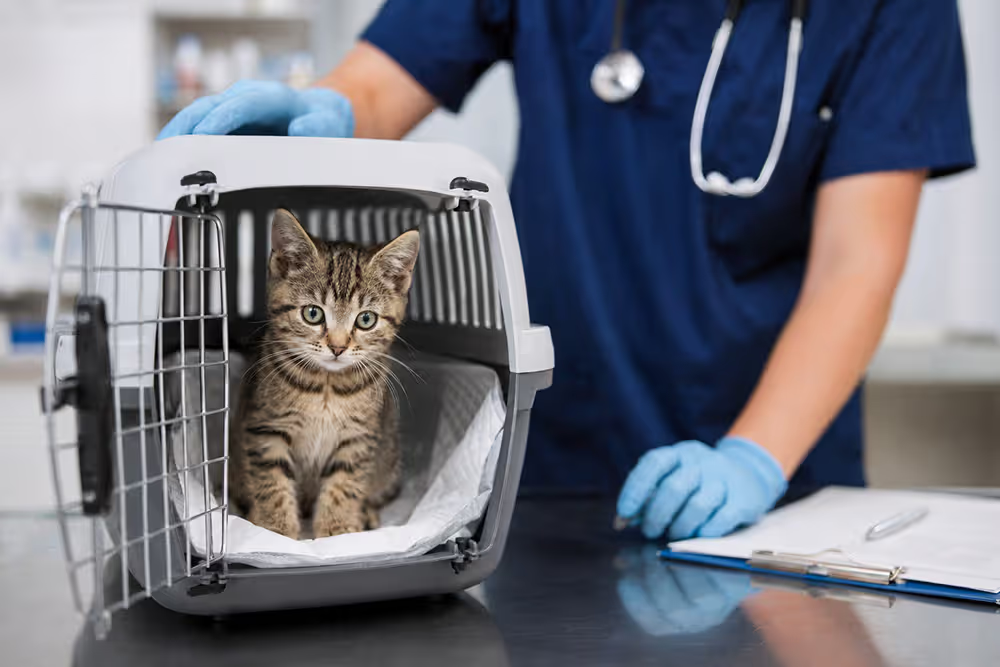
Many owners believe that if a cat lives only indoors, never goes outside and does not meet other animals, serious infectious risks are almost irrelevant. In many ways, an indoor lifestyle does greatly reduce danger. An indoor cat does not fight with street cats, does not eat unknown food outside, does not drink from puddles, does not mix with large numbers of unknown cats and is less exposed to trauma.
But indoor life does not mean complete isolation. Infections can enter a home without the cat ever leaving it. Sometimes they are brought in by people: on hands, shoes, clothing, bags, carriers, blankets or other objects. Sometimes the risk follows contact with an unknown cat. Sometimes it follows a veterinary visit. Sometimes it follows a kind gesture, when someone pets or feeds a sick kitten outside, comes home and immediately touches their own cat.
The purpose of this article is not to frighten owners or discourage them from helping animals. It is certainly not to discourage veterinary care. Veterinary care is essential. But every owner should understand that infectious safety does not begin and end at the breeder’s home or at the veterinary clinic. It continues every day in ordinary family life, especially when there is a kitten, a young cat, an elderly cat or a cat with a weakened immune system at home.
An indoor cat does not live in a vacuum
A cat may never leave the apartment, but the people in the household go outside every day. They walk through stairwells, streets, parking areas, shops, offices and veterinary clinics. They meet other people and sometimes touch other animals. All of this can create a route by which infectious agents move from the outside environment into the home.
For most healthy, properly vaccinated adult cats, this everyday risk is lower than for cats that roam outdoors. But lower does not mean zero. Some infectious agents can survive in the environment and spread through contaminated objects. This is especially important after contact with sick or unknown cats, stray kittens, shelter animals, or places where many cats are present.
Kittens are particularly vulnerable. Their immune system is still developing, vaccine protection does not appear instantly, and the stress of moving to a new home can temporarily reduce resilience. For this reason, the first weeks after moving require sensible attention to hygiene, contacts and unnecessary visits to places with a higher infectious load.
How infections can enter the home
Owners often forget the most common routes.
- Hands after touching an unknown cat
If a person has stroked an unknown cat, especially one that looks sick, weak, dirty, has diarrhoea, or has discharge from the eyes or nose, they should not come home and immediately touch their own cat. Hands should be washed thoroughly first. If there was close contact, changing clothes is also sensible. - Shoes
Shoes touch streets, soil, stairwells, veterinary clinic floors and other places where sick animals may have been. Cats, especially kittens, should not have access to outdoor shoes. Many kittens love to sniff, play and explore near the entrance door, which makes this an easily overlooked risk. - Clothing
If a person has held an unknown cat, especially a sick or stray cat, clothing may carry hair, saliva, secretions, faecal particles or other biological material. Before touching your own cat, changing clothes is a simple and reasonable precaution. - Carriers, blankets and bags
A carrier should not be placed on the floor in a veterinary clinic or in other places where animals walk. After a visit, the carrier should be cleaned and, when necessary, disinfected with a cat safe disinfectant. - Contact with other cats
Even if another cat appears healthy, it may be in the incubation period of an infection or may carry certain pathogens. Particular caution is needed with kittens, stray cats and cats from group environments. - Veterinary clinics
Clinics are necessary, but they are places where sick animals are seen every day. A good clinic should have clear hygiene protocols, but owners should still act sensibly: do not place the carrier on the floor, do not let a kitten walk around the consultation room, and do not allow strangers to touch the cat. - Shelters, temporary foster homes, cat hotels, grooming salons and cat shows
Any place where many animals from different homes meet carries a higher infectious risk than a private home. This does not mean such places must always be avoided. It means that the risk should be understood and managed.
Why contact with a stray kitten can be dangerous
Many people have a natural reaction when they see a weak or sick kitten outside: they want to help, pet it, feed it or pick it up. This is understandable and compassionate. But from an infectious safety point of view, exactly these situations can be dangerous for cats at home.
A sick stray kitten may have a viral infection, parasites, a fungal infection or a high bacterial load. It may simply look “poor”, “hungry” or “a little unwell”, while still being a source of infection. Kittens with lethargy, diarrhoea, vomiting, eye or nasal discharge, severe weakness, dehydration or poor coordination should be treated with particular caution.
Over the years, we have seen tragic cases in which kind but careless behaviour led to devastating consequences. In one case, owners found a kitten outside that looked unwell. They stroked it, fed it and tried to help. Then they returned home and immediately greeted their own cats, who had come to the door to welcome them. Their hands had not been washed thoroughly and their clothes had not been changed. After this, 2 indoor cats developed feline panleukopenia. 1 cat died. The other survived, but only after long, difficult and very expensive treatment.
This example is not shared to blame the owners. They wanted to help an animal. The mistake was not compassion. The mistake was not understanding biosecurity. Helping stray animals can be a good and humane thing to do, but it must be done in a way that does not put your own cats at risk.
Feline panleukopenia: an example of an infection that can easily be brought home
Feline panleukopenia is one of the most dangerous and clearest examples of why hygiene matters so much. It is not simply a “street disease” and not only a problem for homeless animals. An indoor cat can become infected even if it never leaves the home.
The panleukopenia virus is extremely contagious, easily transmitted and highly resistant in the environment. It can be brought home on shoes, clothing, hands, carriers, bowls, bedding and other objects. Without proper disinfection, the virus can remain infectious in the environment for a very long time, up to 1 year.
Cats of any age can be at risk. Kittens and young cats are especially vulnerable, but adult cats can also become severely ill. Vaccination gives cats much better chances, but it is not an absolute guarantee. With a high viral load, stress, weakened immunity or an unfortunate timing of exposure, even a vaccinated cat may become ill.
In practical experience, pedigree indoor cats often suffer particularly severely from such infections compared with ordinary street or semi outdoor cats. One possible reason is that pedigree indoor cats usually live in a more protected environment, encounter less natural infectious pressure, and may be more vulnerable after moving, shows, surgery or other stress.
In countries where there are almost no free roaming cats, the infectious load in the ordinary environment is usually much lower, and in some countries the risk of diseases such as panleukopenia is practically zero. In countries with many street cats, colonies, shelters, unneutered animals and a low vaccination level in the free roaming cat population, the risk is much higher.
Speaking specifically about panleukopenia, owners should be especially cautious in regions where the virus circulates actively among free roaming cats. Based on our practical experience and reports from the region, areas requiring increased caution include Serbia, Bosnia and Herzegovina, Montenegro and Cyprus.
Cyprus has also been described in publications as a country where serious infectious outbreaks in cats have occurred. In addition to outbreaks of panleukopenia, there was a widely reported outbreak of FIP associated with a mutated feline coronavirus variant described as FCoV 23. This variant caused FIP more often than ordinary feline coronavirus and, according to reports from Cyprus, devastated a large cat population on the island. Anyone who wants to understand this in more detail can read the materials published by International Cat Care and later scientific publications about this outbreak.
Vaccination is important, but it does not make a cat invulnerable
Vaccination is one of the main tools for protecting cats against severe infectious disease. But it must be understood correctly. Vaccination does not mean that a cat is guaranteed never to become ill. It means that the immune system has been prepared and usually has a much better chance of dealing with infection more quickly, more mildly and with a lower risk of death.
With dangerous diseases such as feline panleukopenia, vaccination can be a decisive factor in survival. But even vaccination does not save every cat. With a high viral load, an incomplete or incorrect vaccination schedule, weakened immunity, stress, very young age, old age or an unfavourable moment of exposure, the disease can still be severe even in a vaccinated animal. Vaccination gives much better chances, but not an absolute guarantee.
It is also important to understand that vaccines work most effectively against the pathogen types or variants for which they were designed and against which they generate a sufficient immune response. Viruses can change, and new variants may behave differently. There are no vaccines for cats against every infectious agent. The main core vaccines are usually directed against feline panleukopenia, feline herpesvirus and feline calicivirus. This protection is extremely important, but it is not the whole infectious reality of cats.
In recent years, new or more actively studied viral agents have been described in cats and have become relevant to modern veterinary medicine. These include feline morbillivirus, discussed in connection with chronic kidney disease and tubulointerstitial nephritis; domestic cat hepadnavirus, associated with hepatitis, chronic liver disease and hepatocellular carcinoma; rustrela virus, linked to the severe neurological condition known as staggering disease; feline gammaherpesvirus, studied as a persistent herpesvirus in cats; H5N1, highly pathogenic avian influenza, which has become an important spillover risk for cats in recent years; feline astrovirus, feline bocaviruses, feline circovirus and other agents discussed in the context of intestinal, respiratory or systemic disease.
Metagenomic studies continue to identify even more provisional and novel viral sequences. Some may be incidental findings. Some may be linked to disease. Some may cause problems only together with other factors: stress, weak immunity, high animal density, co infections or poor living conditions.
This is why vaccination and hygiene do not replace each other. Vaccination improves a cat’s chances. Hygiene reduces the likelihood of dangerous exposure. Owners need both.
Veterinary clinics: essential care, but not a sterile environment
Veterinary clinics play an enormous role in feline health. Vaccination, neutering and spaying, routine check ups, treatment, surgery, dentistry and emergency care are impossible without veterinarians.
But it is important to understand that a veterinary clinic is a place where not only healthy animals come for routine examinations. Animals with diarrhoea, vomiting, fever, respiratory symptoms, skin disease, parasites and suspected viral infections also come there. Even in a well organised clinic, the infectious load is higher than at home.
Particular caution is needed with kittens, young animals, elderly cats and cats after stress or illness. In urgent cases, serious illness, surgery, intensive care or complex diagnostics, a full veterinary clinic with hospitalisation facilities may be necessary. But for simple routine visits, it may sometimes be wiser to choose a smaller outpatient clinic without hospitalisation facilities, provided that it is competent, careful and follows good hygiene protocols.
A clinic with hospitalisation facilities is not bad in itself. On the contrary, such clinics often save animals in serious cases. But they may also have more severely ill and potentially infectious patients. For this reason, for a routine examination, vaccination, microchip check, paperwork, a simple consultation, neutering or spaying, an owner may consider a clinic with a lower flow of infectious patients.
Neutering and spaying are surgical procedures and must be performed professionally, with proper anaesthesia, sterility and monitoring. But if the procedure is planned and the animal is healthy, it is reasonable to consider not only the surgeon’s quality, but also the infectious load of the clinic.
What to ask a clinic before a routine visit
For a routine visit with a kitten or indoor cat, it is completely reasonable to ask a few questions in advance. A good clinic should not be offended by such questions. A calm and professional answer shows that the clinic understands infectious safety.
You can ask:
- Have there been any recent cases of feline panleukopenia or suspected panleukopenia?
- Are there currently cats in hospitalisation with severe diarrhoea, vomiting or suspected infectious disease?
- Are infectious patients examined separately?
- Is there a separate protocol for cats suspected of having viral infections?
- Is the examination table disinfected between every patient?
- What measures are taken between patients with different infectious status?
- Is it possible to come at the first appointment of the morning?
- Is it possible to wait in the car and enter directly when the room is ready?
- Can the kitten stay in the carrier until the actual examination?
- Can we use our own disposable pad on the examination table?
This is not distrust of the veterinarian. It is normal care for a kitten or indoor cat.
How to behave at the clinic
Before the visit:
- Use a clean carrier.
- Place a clean disposable pad or clean towel inside.
- Do not bring unnecessary items that will be difficult to clean later.
- If possible, choose a time when the clinic is less busy.
During the visit:
- Do not place the carrier on the floor if it can be placed on a chair or held in your hands.
- Do not let the kitten walk around the waiting room.
- Do not allow other people to touch the kitten.
- Do not allow contact with other animals.
- Ask for the examination table to be disinfected if you did not see this being done.
- Use your own clean disposable pad or towel on the table.
- Keep the visit as short as possible when it is only a routine procedure.
After the visit:
- Throw away the disposable pad.
- If a reusable towel or blanket was used, wash it at a high temperature.
- At home, place the carrier somewhere it can be cleaned properly.
- Clean and, if necessary, disinfect the carrier.
- Wash your hands.
- If there was contact with sick animals or contaminated surfaces at the clinic, it is better to change clothes.
What to do after contact with an unknown or stray cat
If you have stroked an unknown cat, fed a stray kitten, helped a sick animal or visited a shelter, do not come home and immediately pick up your own cat. This is especially important if there is a kitten at home.
The correct order is simple:
- Wash your hands thoroughly with soap first.
- If there was close contact with a sick animal, change your clothes.
- Do not allow your cat to sniff outdoor shoes.
- Put shoes away in a closed area.
- Do not bring home bowls, blankets, boxes or carriers that have been in contact with a stray cat unless they have been properly cleaned and disinfected.
- If you held a sick kitten in your arms, it is better to shower and change clothes before touching your own cats.
- If you regularly help stray animals, keep separate clothing and shoes for this purpose.
This is not excessive caution. It is a simple habit that can prevent serious disease.
If you find a sick kitten
If you see a sick kitten outside, act sensibly:
- Do not pick it up with bare hands if direct contact can be avoided.
- Do not bring it into your home if you have cats, especially kittens.
- Contact a veterinarian, rescue organisation, shelter or experienced rescuer.
- If the kitten must be moved, use gloves, a box or a carrier that can later be safely cleaned.
- Do not use that carrier for your own cats without proper disinfection.
- After contact, wash your hands thoroughly, change clothes and clean your shoes.
- Do not allow any contact between the found animal and your own cats.
The most dangerous decision is to bring a found kitten directly into your home “just for one night” and place it in the bathroom or hallway if you already have cats. Even if the animals never meet directly, risk may remain through hands, shoes, clothing, surfaces and objects.
Signs that require urgent veterinary attention
Being careful about clinic choice does not mean delaying help. If a cat is unwell, waiting can be dangerous.
Contact a veterinarian urgently if your cat has:
- refusal to eat
- severe lethargy
- repeated vomiting
- diarrhoea, especially with blood or a strong smell
- signs of dehydration
- fever or marked weakness
- sudden deterioration
- abdominal pain
- difficult breathing
- neurological signs
If an infection is suspected, call the clinic before arrival and describe the symptoms. A good clinic can tell you how to come in a way that reduces risk for other animals: a separate entrance, waiting in the car, an isolation room or other precautions.
The main message
An indoor cat is protected from many dangers of outdoor life, but not from every infectious risk. The owner can become the bridge between the outside environment and the cat, especially after contact with unknown cats, sick kittens, shelters or veterinary clinics.
Sensible hygiene does not require fear and should not turn life into constant anxiety. But it does require a few simple habits: wash your hands, change clothes after risky contact, do not bring potentially contaminated objects into the home, do not place carriers on clinic floors, choose appropriate clinics for routine visits and do not allow contact between your cats and unknown animals.
Loving cats is not only about affection and care. It is also about responsibility for their safety. Sometimes a very simple action, such as washing your hands thoroughly before touching your own cat, can make an enormous difference.
Written by Sergej Reiner, felinology specialist at Royal Esprit cattery.
© 2026Royal Esprit. All rights reserved. Reproduction, distribution or republication of this article, in whole or in part, is not permitted without the author’s prior written permission.