
Early Spaying and Neutering in Cats: An Honest Assessment of the Right Time
Early spaying and neutering can be highly beneficial when there is a real risk of unwanted reproduction, especially for shelter and free roaming cats. For pedigree cats raised in controlled home environments, the timing of surgery should be considered individually, with attention to breed, development, health, nutrition, and future living conditions.
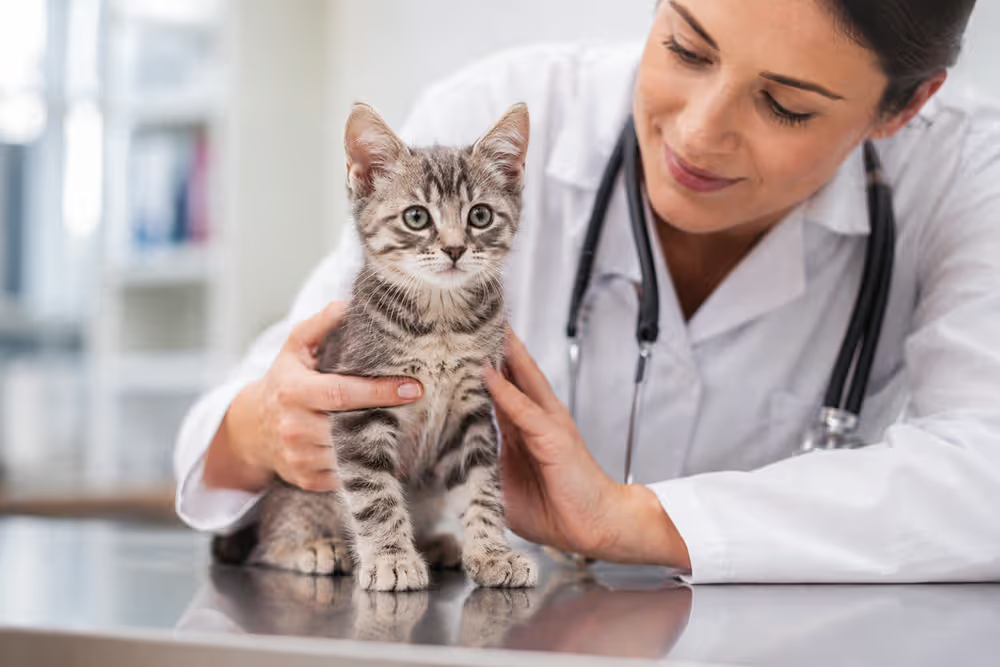
Spaying and neutering are among the most common surgical procedures in veterinary medicine. Their purpose is not only to prevent unwanted litters, but also to reduce behaviour related to reproductive hormones and improve the long term quality of life of many cats.
The importance of spaying and neutering cats that are not intended for breeding is already widely recognised. The more difficult question is not whether the procedure should be performed, but when it should be performed.
Early spaying and neutering can be an excellent and responsible choice when there is a genuine risk of unwanted reproduction. Some female cats can have their first heat as early as 5 or 6 months of age, and sometimes even earlier. Waiting until a later age is therefore not always safe when the goal is to prevent pregnancy. This is particularly important for shelter cats, free roaming cats, and kittens whose future living conditions cannot be fully controlled. In these situations, performing the procedure before adoption or before sexual maturity can prevent many future litters and reduce the number of cats that eventually enter shelters or live without proper care.
The situation may be different for pedigree cats raised in a controlled home environment. These kittens are usually monitored closely, their future owners are carefully selected, and their development, health at the time of surgery, breed characteristics, and family history are often well known. For them, the timing of surgery can be considered individually rather than being determined by one fixed age applied to every cat.
This article considers both sides of the discussion. Early spaying and neutering may have certain advantages, but they also have limitations that deserve an honest discussion.
What Do We Mean by Early Spaying and Neutering?
The terminology used when discussing the timing of surgery is not always consistent.
Pediatric spaying and neutering usually refers to procedures performed on very young kittens, often between 8 and 16 weeks of age.
Early spaying and neutering generally refers to surgery performed before approximately 4 months of age.
Spaying and neutering before sexual maturity is a broader concept. It may include procedures performed at 4 or 5 months of age, before the first heat in females and before reproductive behaviour becomes established in males.
These categories are not identical. A kitten neutered at 10 weeks and a kitten neutered at 5 months are both operated on before sexual maturity, but they are at very different stages of physical development.
Early spaying and neutering became widely used in animal shelters, especially in the United States, because it allowed kittens to be adopted only after the procedure had already been completed. When surgery was delayed for several months and depended on the new owner, the result was often accidental litters, missed veterinary appointments, and continued reproduction.
The American Veterinary Medical Association first adopted a policy supporting pediatric sterilisation in 1994. Other professional organisations also supported spaying and neutering cats before sexual maturity as part of responsible population control. At the same time, these recommendations did not mean that every cat should be operated on at the earliest possible age. The condition of the individual animal and the experience of the veterinarian are decisive.
When Early Spaying and Neutering Has Clear Benefits
The strongest argument for early surgery is the reliable prevention of unwanted litters.
Cats can become sexually mature surprisingly early. Some females may have their first heat at 5 or 6 months of age, and sometimes even earlier. Young males may also begin showing reproductive behaviour while they still look very much like kittens. If cats have outdoor access, live in a home with several animals, or may come into contact with intact cats, waiting too long can result in an unplanned pregnancy.
For shelter cats and free roaming cats, this risk is especially important. Early surgery ensures that the cat cannot contribute to further population growth after leaving the shelter or returning to its territory. In these circumstances, the benefits are not theoretical. One procedure can prevent many future kittens from being born into uncertain or difficult conditions.
Early surgery can also prevent reproductive behaviour from becoming established. Males neutered before sexual maturity are less likely to begin urine marking, roaming in search of females, fighting with other males, or displaying persistent sexual behaviour. Females do not experience heat cycles, loud calling, restlessness, or the risk of pregnancy.
Many owners find that cats spayed or neutered before sexual maturity remain playful, affectionate, and strongly bonded to their families. Temperament, genetics, socialisation, and living conditions still have a major influence on behaviour, but removing the pressure of reproductive hormones can make life calmer for both the cat and the owner.
Common Concerns About Early Spaying and Neutering
Does Early Surgery Stop a Kitten from Growing Properly?
One of the most common concerns is that a kitten spayed or neutered at a young age will remain smaller or fail to develop normally.
Current evidence does not support the idea that early surgery stops normal growth. Cats neutered early may continue growing for slightly longer because the growth plates can close later. This may result in somewhat longer limb bones, but it does not mean that the cat has failed to develop properly.
The long term clinical importance of delayed growth plate closure in cats is still not completely understood. Most cats do not develop an obvious problem. However, this remains one of the reasons why some veterinarians and breeders prefer a more individual approach with large, heavy, or slowly developing breeds.
Does Early Surgery Cause Urinary Tract Problems?
Another common belief is that early spaying and neutering increase the risk of urinary tract disease, including bladder stones.
However, long term studies have not found an increased risk of these problems in cats operated on at a young age. Urinary tract disease depends more on nutrition, genetics, and general living conditions than on the age at which surgery was performed.
If a cat already has a tendency toward urinary problems or comes from lines in which these conditions are common, a veterinarian may recommend a more individual approach and closer monitoring regardless of the age at surgery.
Does Early Surgery Cause Obesity?
Spayed and neutered cats often require fewer calories than intact cats. This change can occur after spaying or neutering at any age.
Obesity does not develop simply because the procedure was performed early. Weight gain develops when a cat consumes more calories than it uses, especially when activity is low or food is available without restriction.
After surgery, owners should monitor body condition, portion size, and physical activity. This does not mean that the cat should be moved to a diet with a low content of animal protein.
A high level of quality animal protein does not cause obesity in neutered cats and is often highly beneficial. Several studies, including work by Nguyen et al., Hoenig and colleagues, Laflamme and other researchers, have shown that high protein diets, usually providing more than 40 to 45 percent of metabolisable energy from protein, help preserve lean body mass during weight maintenance and weight loss.
Protein is especially important during controlled weight reduction. When calorie intake is reduced, the cat should lose primarily fat tissue, not muscle. Low protein weight loss diets can cause the animal to lose a substantial amount of muscle together with fat. The number on the scale may decrease, but body composition and the overall condition of the cat become worse.
A high protein diet also helps prevent sarcopenic obesity, a condition in which muscle mass is lost while excess body fat remains. Adequate protein supports satiety, so the cat asks for food less often and tolerates calorie restriction more easily. Some studies also suggest that a high protein intake may slightly increase energy expenditure and fat oxidation.
Low protein light diets are an outdated approach for healthy cats. A cat is an obligate carnivore, and its need for quality animal protein does not disappear after spaying or neutering. What changes first is the requirement for calories.
Studies of high protein diets for weight control also show that these diets can help neutered cats lose weight even when previous conventional diet foods have not produced the desired result. This does not mean that every high protein food automatically causes weight loss. If a food is very calorie dense and the cat eats it without restriction, the risk of obesity increases. It should also be noted that a low carbohydrate content alone does not make a food suitable for weight control.
Wet food intake is usually easier to control than dry food intake. Wet food contains more water, provides a larger volume of food for fewer calories, and makes it easier to assess how much the cat eats during the day. Many owners observe that cats fed mainly wet food are less likely to gain excess weight, especially when food is served in measured portions rather than left available at all times.
The result depends on the overall balance of the diet and the quality of its ingredients. The cat’s age, activity level, and existing body condition also matter.
For a healthy spayed or neutered cat, the best choice is a complete diet with a high content of quality animal protein, controlled calorie density, and clearly measured portions.
Protein may need to be restricted in cats with kidney disease, but that is a separate situation and does not apply to the nutrition of a healthy spayed or neutered cat.
Is Anaesthesia More Dangerous for Young Kittens?
Early spaying and neutering can be performed safely, but anaesthesia in a small kitten requires specific knowledge and careful preparation.
Young kittens are more vulnerable to hypothermia, hypoglycaemia, dehydration, and blood loss. Their small body size leaves less room for error, and equipment designed for larger animals may not be suitable. Careful temperature control, accurate dosing, appropriate monitoring, gentle tissue handling, and an efficient surgical technique are essential.
An experienced veterinary team can usually perform the procedure quickly, with minimal bleeding and a smooth recovery. The important point is not that anaesthesia is automatically safer in a young kitten, but that it can be very safe when the clinic is properly prepared to work with young animals.
Possible Drawbacks and Limitations of Early Spaying and Neutering
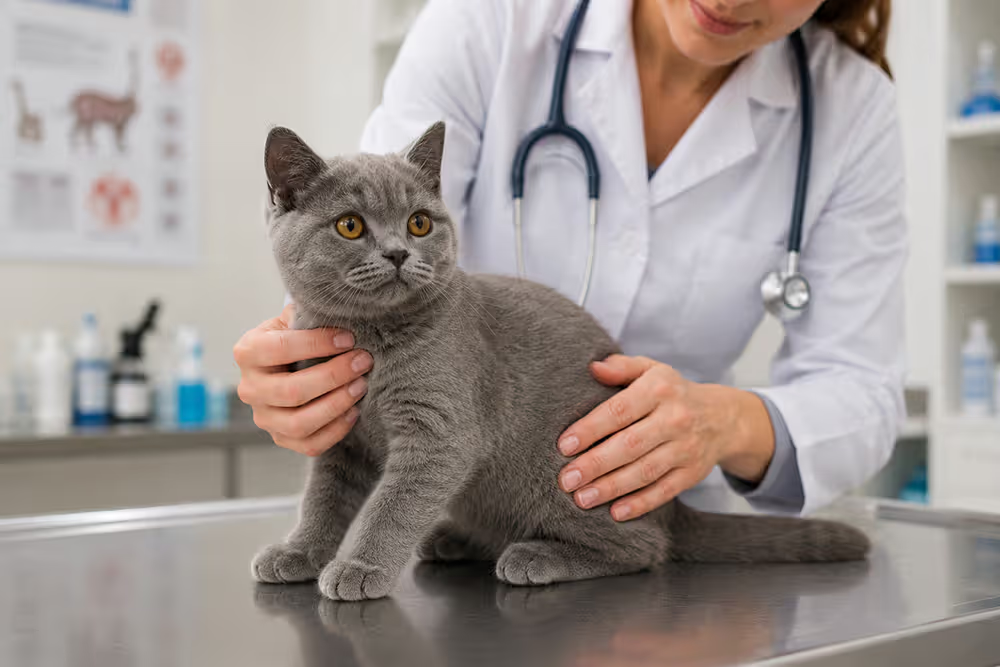
Early spaying and neutering are not dangerous by definition, but they are not necessarily the ideal choice for every kitten.
The Procedure Requires Specific Veterinary Experience
Operating on a very young kitten is not the same as operating on an older juvenile or adult cat.
The animal is smaller, the tissues are more delicate, the reproductive organs are less developed, and the acceptable amount of blood loss is very limited. Anaesthetic dosing must be precise, body temperature must be protected, and the surgical team must be comfortable working quickly and confidently with young animals.
Many veterinarians have extensive experience with routine spaying and neutering but have performed relatively few procedures on kittens between 8 and 12 weeks of age. Some clinics may not have suitable monitoring equipment, warming systems, or established protocols for very small animals.
A veterinarian who prefers to wait until the kitten is older is not necessarily opposed to modern practice. In some cases, the decision reflects an honest assessment of the clinic’s experience, equipment, and ability to provide the safest possible treatment.
Young Kittens Have Less Physiological Reserve
A small kitten has a lower total blood volume, limited energy reserves, and a greater tendency to lose body heat during surgery.
This does not make early surgery unacceptable, but it means that complications can develop more quickly if preparation or monitoring is inadequate. The younger and smaller the kitten, the more important the experience of the veterinary team becomes.
Growth Plates May Close Later
Removing the gonads before physical maturity can delay the closure of the growth plates. In many cats this has no obvious negative consequence, but the long term effect has not been studied equally well in every breed, body type, or bloodline.
This uncertainty is one reason why some breeders and veterinarians prefer to avoid very early surgery in large, heavy, or slow growing breeds.
Long Term Breed Specific Data Are Limited
Much of the available research evaluates cats as one broad population. This is useful, but it does not necessarily answer every question about individual breeds.
Pedigree cats can differ in body structure, rate of development, metabolism, genetic diversity, and susceptibility to particular health problems. A result observed in a general population of shelter cats may not always apply in exactly the same way to every pedigree breed or breeding line.
The absence of evidence of harm is reassuring, but it is not the same as having detailed long term evidence for every breed.
Why Pedigree Cats May Need a More Individual Approach
Pedigree kittens are usually raised under very different conditions from shelter cats or free roaming cats.
A responsible breeder knows the kitten’s parents, family history, early development, response to vaccination, growth pattern, recent health, and future home. The kitten is not normally exposed to uncontrolled mating opportunities, and the new owner has agreed that the cat will not be used for breeding.
In this situation, there may be no urgent population control reason to perform surgery at the earliest possible age. The breeder and veterinarian can instead consider when the individual kitten is physically ready.
It is known that some cat breeds, as well as individual bloodlines within a breed, may be less resilient during periods of rapid growth, vaccination, and stress, as well as during recovery from possible infections. This does not mean that all pedigree cats have weak immune systems. It means that the kitten’s condition, development, and ability to tolerate elective surgery should be assessed individually.
Oriental Breeds, Including Burmese Cats
Many experienced breeders and some veterinarians prefer not to spay or neuter Oriental breeds, including Burmese cats, at a very young age.
These breeds may appear physically mature early because they are active, muscular, and socially confident, but this does not always mean that their development is complete. Some breeders prefer to wait until after approximately 5.5 months of age, allowing more time for physical maturation before surgery.
This is not a universal rule and should not be presented as one. It is an individual approach based on breed experience, the condition of the kitten, and the ability to prevent accidental mating.
Large and Slow Growing Breeds
Large breeds such as Maine Coons, Norwegian Forest Cats, and Ragdolls may continue developing for a long time.
Many breeders prefer to avoid pediatric surgery in these breeds and to assess the kitten’s growth, bone structure, muscle development, body condition, and overall health before deciding on the timing of the procedure.
Scientific evidence does not prove that every large breed cat must be neutered later. However, the limited amount of long term breed specific data makes a cautious and individual approach reasonable.
Individual Differences in Development
Some kittens develop more slowly than their littermates. They may be smaller, less muscular, more sensitive to stress, or slower to recover after vaccination.
For these kittens, the decision should be based on a clinical examination, the kitten’s health at the time, and an assessment of overall development, not only on calendar age.
Why Many Veterinarians Still Prefer Later Spaying and Neutering
Many veterinarians continue to recommend surgery between 6 and 9 months of age. Their reasons are not always based on outdated ideas or resistance to change.
Traditional Training and Clinical Routine
For many years, veterinary schools and clinics taught that cats should be spayed or neutered at approximately 6 to 9 months of age. Veterinarians who trained under this system may have performed thousands of successful procedures at that age and may see little reason to change a protocol that has worked well in their practice.
Lack of Experience and Specific Skills
Very young kittens require a different level of precision and familiarity.
A veterinarian who rarely operates on young kittens may reasonably feel more confident waiting until the reproductive organs are larger, the animal has a greater blood volume, and standard equipment can be used more easily.
This should not be dismissed as simple conservatism. The safest surgeon is often the one who understands the limits of their own experience.
Easier Surgical Access in Older Kittens
In an older kitten, the reproductive organs are larger and easier to identify and handle. The surgical field is less confined, and the procedure may be technically more straightforward for a veterinarian who does not regularly perform surgery on very young kittens.
A More Cautious View of Long Term Effects
Some veterinarians remain cautious because long term data are not equally strong for every breed, body type, and health background.
A cautious approach does not necessarily mean rejecting early surgery. It may simply reflect the view that an elective procedure should be timed according to the individual animal whenever there is no urgent risk of reproduction.
Practical Advice for Owners
The success of spaying or neutering depends not only on the age of the kitten, but also on careful preparation, appropriate surgical technique, and good aftercare.
Before Surgery
The kitten should be healthy, active, eating normally, and free from signs of infection.
Vaccination and parasite control should be planned sensibly around the procedure. Surgery should not be scheduled immediately after a stressful event, a long journey, a strong vaccination reaction, or during a period when the kitten’s health causes concern.
The kitten should not eat for at least 6 hours before the procedure, unless the veterinarian performing the surgery gives different instructions. Water can usually remain available until a few hours before anaesthesia, but the clinic’s specific instructions should always be followed.
Owners should arrange the procedure for a day when they can observe the kitten closely after returning home.
Aftercare for Male Kittens
Male kittens usually recover quickly after neutering. Many are alert and active within a few hours.
Even when recovery appears easy, the kitten should be monitored for excessive sleepiness, vomiting, bleeding, swelling, pain, difficulty urinating, or unusual behaviour. Any concern should be discussed with the veterinarian promptly.
Aftercare for Female Kittens
Spaying is a more invasive procedure than male neutering, so the choice of surgeon is especially important.
Many modern veterinary clinics now perform laparoscopic spaying. When laparoscopy is available and performed by an experienced surgeon, it is the most gentle option because it requires only small incisions, causes less tissue trauma, and usually allows an easier recovery.
When open surgery is performed, a small ventral abdominal incision is preferable to a flank incision, particularly when the procedure is carried out by a veterinarian experienced in early spaying. Internal sutures are also preferable because they reduce the risk of the kitten pulling at visible stitches and usually make recovery easier.
For routine spaying of a healthy female cat, removal of the ovaries alone is usually sufficient. This procedure is called an ovariectomy. When the ovaries are fully removed, the uterus is no longer exposed to normal hormonal stimulation and gradually becomes inactive. Removal of the uterus is therefore usually unnecessary unless uterine disease or another medical indication is present.
Immune Function of the Uterus in Cats
The uterus, more precisely the endometrium, has its own immune microenvironment. It contains immune cells, toll like receptors including TLR2 and TLR4, and other mechanisms of innate immunity.
This is mainly a local immune function within the uterus, but a contribution to the general systemic immunity of the cat is also possible, although this is still being studied.
The surgical incision should be checked several times each day. It should remain clean, dry, and closed, without increasing redness, swelling, discharge, or pain.
Internal sutures often reduce the need for an Elizabethan collar, but they do not remove the need for observation. A kitten that persistently licks or bites the incision may still require protection.
Owners should follow all instructions regarding pain relief, activity restriction, wound care, and follow up examinations.
Early spaying and neutering can be a very good choice when there is a real risk of unwanted reproduction. For shelter cats, free roaming cats, and kittens whose future environment cannot be fully controlled, the benefits are clear and immediate.
The same procedure may also be appropriate for many healthy privately owned cats. However, early surgery should not be treated as a single rule that must be applied to every kitten, every breed, and every living situation.
With pedigree cats raised in a controlled home environment, there is often time to make a more individual decision. Breed, bloodline, growth rate, health at the time of surgery, physical development, future living conditions, and the experience of the veterinary surgeon all deserve consideration.
The most responsible approach is not to choose the earliest or the latest possible age automatically. It is to select the time that offers the best balance between preventing unwanted reproduction and protecting the health and development of the individual cat.
Written by Sergej Reiner, felinology specialist at Royal Esprit cattery.
© 2026Royal Esprit. All rights reserved. Reproduction, distribution or republication of this article, in whole or in part, is not permitted without the author’s prior written permission.