
Why a Pedigree Cat Might Be Right for You
A pedigree cat offers more than appearance. For many families, breed means a more predictable temperament, known origin, responsible breeding and the possibility to choose a cat whose character truly fits their lifestyle.
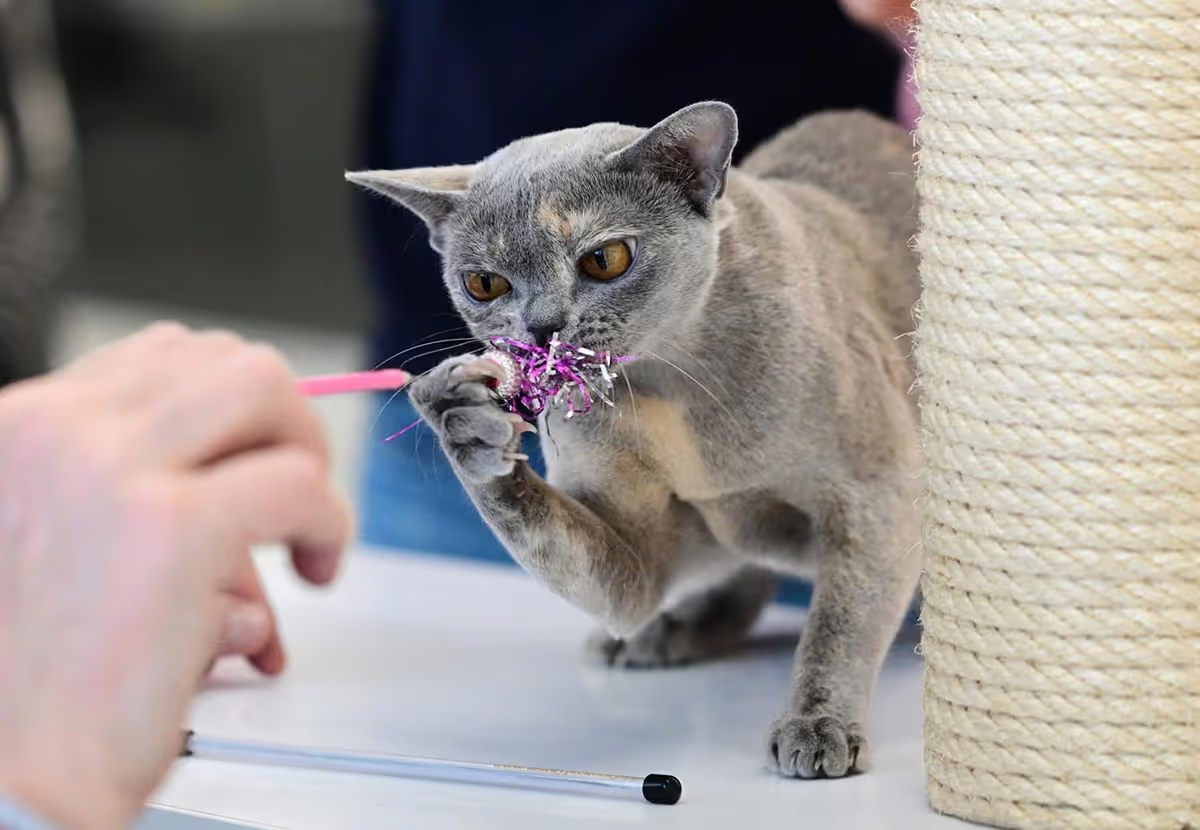
In many European countries, especially in places such as Germany, Switzerland, Austria or the Netherlands, cats are usually not chosen in the same way as they might be in regions where stray kittens are still a common part of everyday life. Many families do not simply find a kitten outside and bring it home. More often, they make a conscious decision: they either adopt from a shelter or they choose a kitten from a breeder.
Both choices can be meaningful. A shelter cat can be a wonderful companion, and giving a home to an animal in need is a good decision for many people.
But choosing a pedigree kitten from a responsible breeder is a different kind of decision.
When you choose a cat deliberately, the question is not only whether you want a cat. The real question is what kind of cat will live with you for the next 15 or even 20 years.
A Cat Is a Long Term Family Member
A cat is not a short term purchase. It becomes part of the household, the rhythm of the home and often the emotional life of the family.
That is why choosing a cat should not be done carelessly. A kitten may be small and charming, but it will grow into an adult cat with its own temperament, needs, habits and way of communicating.
Some people want a calm cat that spends hours resting nearby. Others want an active, intelligent cat that follows them around the house and takes part in everything. Some families need a patient cat that can live with children. Some people prefer a more independent cat that does not constantly demand contact.
These are not small differences. They define everyday life with the animal.
A Shelter Cat Can Be a Good Choice, but It Is Often Less Predictable
A shelter cat or a non pedigree cat can be beautiful, affectionate, clever and deeply loved. Many people have excellent relationships with cats of unknown origin.
But when you take a kitten or a young cat with unknown background, you often do not know what kind of adult animal it will become.
You may not know the temperament of the parents. You may not know whether the kitten comes from calm, confident cats or from nervous, reactive animals. You may not know how it was socialised, what health background it has, how large it may grow, how active it will be, or how strongly it will need human contact.
Sometimes the result is perfect. Sometimes it is not. That is the nature of an unknown background.
For some people this is acceptable. They are ready to take the cat as it is and adapt to whatever develops. For others, especially families with children, people with a clear lifestyle, or owners who know exactly what kind of companion they want, predictability matters.
This is where a pedigree cat becomes important.
A Breed Is Not Only About Beauty
Many people think that the main purpose of a pedigree cat is appearance. Coat colour, eye shape, body type, head shape, size and expression are certainly part of a breed. But they are not the whole point.
A breed is not just a beautiful exterior. A real breed is a repeated type.
That type includes appearance, but it also includes temperament, activity level, communication style, social behaviour and the way the cat relates to people.
This is the main reason to choose a pedigree cat. You are not only choosing how the cat will look. You are choosing the kind of character that is most likely to live with you.
A British Shorthair is not a Burmese. A Persian is not an Oriental. A Maine Coon is not an Abyssinian. These differences are not only in coat, ears or body shape. They are differences in energy, emotional expression, independence, contact with humans and daily behaviour.
That is the value of a breed.
Temperament Is the Real Reason to Choose a Breed
For many owners, temperament is more important than appearance.
A calm person may prefer a quiet, solid, less demanding cat. A very social person may want a cat that comes close, communicates, follows, participates and wants contact. A family with children may need a cat with a stable, friendly and tolerant temperament. A person who loves active animals may want a cat that remains playful and involved for many years.
Different breeds were formed with different tendencies. Some are more independent. Some are more vocal. Some are more physical in their affection. Some are more reserved. Some want to observe life from a distance. Others want to be in the middle of everything.
This does not mean that every cat in a breed is identical. Every living animal is an individual.
But in a stable breed, especially in a well selected line, the range of temperament is much more predictable. If almost 100 percent of kittens in a line grow into social, people oriented, affectionate and active cats, that is not a coincidence. That is breed type, selection and responsible breeding.
Burmese Cats Are Chosen for Contact
Burmese cats are a good example of why breed matters.
People do not choose a Burmese only because of its silky coat, strong body, warm expression or beautiful eye colour. They choose a Burmese because of its temperament.
A good Burmese is usually highly people oriented. It wants contact. It wants to be part of the family. It often follows people around the home, sits nearby, watches what is happening and takes part in daily life.
This is not the right cat for someone who wants a distant animal that simply decorates the sofa. A Burmese needs interaction. It enjoys people. It usually remains playful, intelligent and emotionally present.
This is exactly why the breed can be such a good choice for families who want a real companion, not just a cat that lives in the same house.
A Burmese is very different from a British Shorthair. It is also very different from a Persian, a Norwegian Forest Cat or an Oriental. Choosing a breed means choosing these differences in advance.
Predictability Does Not Mean Every Kitten Is the Same
No honest breeder can promise that every kitten will grow exactly the same. Genetics is strong, but environment also matters. Early handling, the mother, littermates, the new home, stress, routine and the owner’s behaviour all influence the final adult cat.
But predictability does not need to be absolute to be valuable.
When a breeder knows the parents, grandparents, lines, previous litters and the early development of the kittens, the breeder can usually say much more than “this kitten is cute”.
A responsible breeder can observe which kitten is more confident, which one is calmer, which one is more attached to people, which one is more active, which one may suit children better and which one needs a quieter home.
This is one of the biggest advantages of choosing a pedigree kitten from a serious breeder. You are not choosing blindly.
The Breeder Matters as Much as the Breed
A pedigree on paper is not enough.
The value of a pedigree cat depends greatly on the breeder behind it. A responsible breeder does not simply produce kittens. The breeder works with lines, studies health, follows temperament, chooses combinations, raises kittens properly and thinks about the future life of each animal.
A good breeder knows the difference between a kitten that is beautiful and a kitten that is suitable for a particular family.
This matters especially with social breeds such as Burmese cats. A Burmese kitten should not only have the correct type and colour. It should also be raised in a way that supports confidence, trust in people, normal social behaviour and emotional stability.
The breeder sees the kittens from birth. The breeder knows how they react to handling, noise, visitors, other cats and everyday home life. This knowledge is important when helping a family choose the right kitten.
Why a Pedigree Kitten Costs More
A pedigree kitten from a serious breeder costs more than a random kitten. This is normal.
The price is not simply the cost of food, litter and vaccinations. That is only a very small part of it.
The price reflects years of breeding work, selection of lines, health testing, import of valuable bloodlines, veterinary care, proper nutrition, registration, documents, shows, genetic knowledge, time, experience and responsibility.
It also reflects the fact that good breeding is not mass production. A serious breeder does not simply mate 2 cats and sell kittens. The goal is to produce healthy, stable, beautiful and typical kittens that represent the breed well and can live happily with people.
A cheap kitten may become expensive later if health, temperament, socialisation or origin are uncertain. A well bred kitten costs more at the beginning because much of the serious work has already been done before the kitten leaves the breeder.
Pet Class Does Not Mean a Lower Quality Cat
Many people misunderstand the term “pet class”.
A pet class kitten is a kitten sold as a beloved family companion, not for breeding. It does not mean that the kitten is unhealthy, defective or less valuable as a pet.
In fact, many pet class kittens are beautiful, healthy and very typical of the breed. They may simply not be the exact animal the breeder needs for the next generation of a breeding programme.
A breeder may keep or sell for breeding only a very small number of kittens. These decisions depend on structure, type, colour, pedigree, genetic planning, temperament and the direction of the breeding programme.
For a family, a pet class kitten can be the ideal choice. The family does not need a breeding animal. It needs a healthy, well raised, affectionate and suitable companion.
At Royal Esprit, kittens are placed as pets, not for breeding. That does not reduce their value. It means they are chosen for life as loved family members.
Documents Are Not Just Paper
Some people say they do not need a pedigree because they are not planning to breed or show the cat.
But documents are not only for exhibitions. A pedigree is a record of origin. It tells you who the parents, grandparents and earlier generations are. It shows that the cat belongs to a known breed and comes from a registered breeding programme.
A veterinary passport, microchip, vaccination record and official registration are also part of responsible ownership. They show that the kitten was not simply produced and sold without trace.
For a pet owner, documents may seem less important than the kitten itself. But they are part of transparency. They show that the breeder is prepared to stand behind the cat’s origin.
Choosing the Right Breed Means Choosing the Right Life Together
A cat will share your home, your routine, your children, your quiet evenings, your work days and your personal space for many years.
The right breed makes that life easier and more natural.
A highly social cat in a home that wants interaction can become a joy. The same cat in a home that wants distance may become too demanding. A calm, independent cat may be perfect for one person and too reserved for another.
The question is not which breed is “best”. The question is which breed is right for you.
For people who want a close, affectionate, intelligent and people oriented companion, a Burmese cat can be an excellent choice. For people who prefer a more independent or less interactive cat, another breed may be more suitable.
That is the purpose of pedigree breeding: not to make all cats the same, but to make it possible for people to choose the kind of cat that truly fits their life.
A pedigree cat is not only a cat with a beautiful appearance. It is a cat with known origin, recognisable type, more predictable temperament and the support of a breeder who knows the breed. For many families, that makes the difference between simply having a cat and choosing the right companion.
Written by Sergej Reiner, felinology specialist at Royal Esprit cattery.
© 2026Royal Esprit. All rights reserved. Reproduction, distribution or republication of this article, in whole or in part, is not permitted without the author’s prior written permission.