
Why Kittens Need to Play: Development, Hunting Skills, and Safe Play at Home
Play is essential for a kitten’s physical, social and emotional development. Safe toys, proper boundaries, daily interaction and a well prepared home help kittens practise natural hunting behaviour without damaging the household or learning to bite human hands.
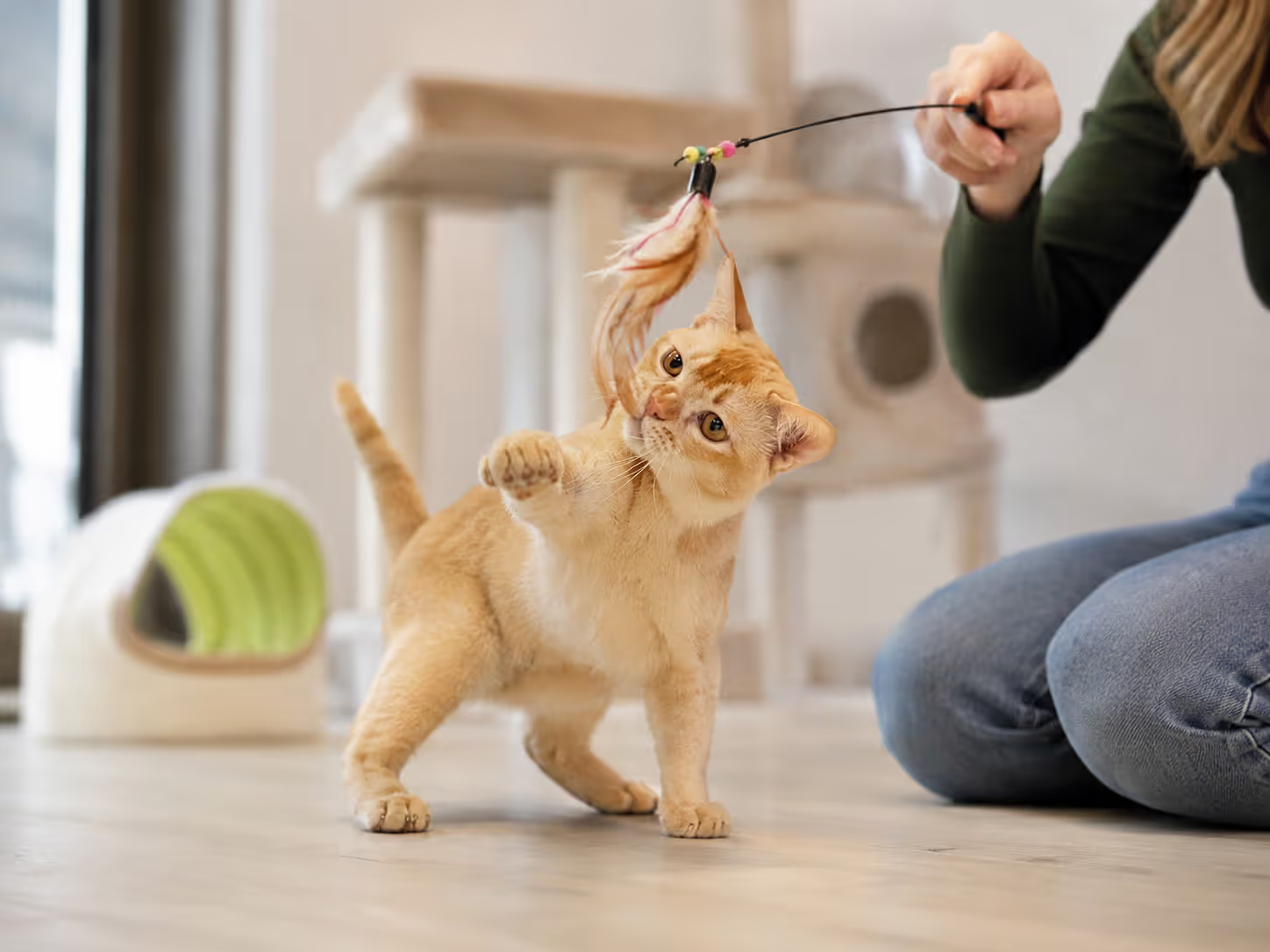
Kittens are playful by nature. For many owners, this is one of the most charming parts of living with a young cat. A kitten runs, jumps, hides, chases, bites toys, climbs onto furniture, attacks moving objects and then suddenly falls asleep as if nothing happened.
This behaviour is not random. Play is one of the most important parts of a kitten’s development. Through play, kittens learn how to move, how to balance, how to communicate, how to control their bite, how to use their claws, and how to understand the world around them.
For a kitten, play is not only entertainment. It is training for adult life.
Why Play Is So Important for Kittens
In the feline world, play has several important functions. It helps the kitten develop coordination, strength, confidence and social skills. It also allows the kitten to practise natural hunting behaviour in a safe and harmless way.
Even a kitten that will live indoors all its life still has the instincts of a small predator. Chasing, stalking, jumping, grabbing and biting are normal parts of feline behaviour. Good play gives these instincts a healthy outlet.
Without enough suitable play, a kitten may redirect its energy in ways that are unpleasant or even dangerous for people. It may attack hands, bite ankles, climb curtains, scratch furniture, knock objects from shelves or become very active at night.
This does not mean the kitten is bad. It usually means the kitten has energy, curiosity and hunting instinct, but not enough appropriate ways to use them.
Social Play: Learning from the Mother and Littermates
The first important form of play is social play.
Young kittens learn a great deal from their mother and littermates. They wrestle, chase each other, bite, kick with their hind legs and practise body language. During this process, they learn how hard they can bite, when another kitten wants to stop, how to read signals and how to control their own excitement.
This is one of the reasons why kittens should not leave their mother and littermates too early. A kitten that grows up with other kittens and with a calm, experienced mother has more opportunities to learn normal feline boundaries.
Good early social play helps a kitten become more confident, balanced and easier to live with.
Predatory Play: Practising Hunting Behaviour
Another important form of play is predatory play.
This type of play looks like hunting. The kitten watches, crouches, stalks, runs, jumps, grabs and bites. To people it can sometimes look intense or even aggressive, but for the kitten it is normal learning behaviour.
Predatory play is not a sign that the kitten is becoming dangerous. It is part of normal feline development. The goal is not to stop this behaviour, but to direct it toward appropriate toys.
A kitten should be allowed to chase, catch and bite toys. This gives the natural hunting sequence a satisfying ending.
Object Play: Toys, Movement and Coordination
As kittens grow, they become more interested in objects around them. A small ball, a soft toy, a moving feather, a cardboard box or a crinkly tunnel can all become part of play.
Object play helps develop eye and paw coordination. The kitten learns to judge distance, control movement, jump accurately and use its paws more precisely.
The best toys are usually light, safe and easy to move. Many kittens enjoy toys they can chase, bat with a paw, carry in the mouth or kick with their hind legs.
However, not every toy sold in a pet shop is automatically safe or suitable. Some toys are designed more for human entertainment, while the real safety of the cat may be ignored.
Do Not Use Your Hands as Toys
One of the most important rules is simple: do not play with a kitten using your hands.
A small kitten biting fingers may seem funny at first. The bites are small, the claws are tiny, and the behaviour may look cute. But the kitten is learning a rule: human skin is a toy.
As the kitten grows stronger, this becomes a problem. What was harmless at 10 weeks can become painful and unsafe later. The cat may begin to attack hands, arms or feet during play, or bite when excited.
Hands should be associated with calm contact, care and affection, not hunting and biting. Use toys instead. If the kitten attacks your hand, stop the game calmly and redirect the kitten to an appropriate toy.
Be Careful with Laser Pointers
Laser pointers are popular because they are easy for people. The cat runs, jumps and chases the light, and it may look funny. But for the cat, this type of play has a serious problem: the light can never be caught.
A normal hunting sequence should end with a physical capture. The cat stalks, chases, jumps, grabs and bites. With a laser pointer, the cat can chase and chase, but there is no real prey at the end.
Used once in a while, a laser pointer is not a tragedy. But it should not be used as a regular or main form of play. Constant laser play can gradually create frustration, especially in active and highly motivated cats. The cat becomes excited but never gets the satisfaction of catching something real.
If a laser is used occasionally, the game should always end by directing the light onto a real toy that the cat can physically catch, bite and hold. Even then, it is better to rely mainly on toys that allow real contact.
For daily play, fishing rod toys, soft toys, balls, tunnels and safe moving toys are much better.
Choosing Safe Toys
Good kitten toys should allow movement, chasing and catching without creating unnecessary risk.
Fishing rod toys and wand toys can be excellent because they allow the kitten to chase and jump without attacking the owner’s hands. But they must be chosen carefully.
Avoid toys with hard metal parts, sharp connectors or heavy clips close to the part the kitten may bite. During play, a kitten can bite down suddenly and damage a tooth or gum on a metal piece. Many toys are sold with small bells, metal rings, hooks or hard attachments. The fact that a toy is sold in a shop does not mean it is appropriate.
Choose toys with soft, secure attachments and no dangerous hard parts in the area the kitten may bite.
Also be careful with toys that contain small pieces that can be chewed off and swallowed. Eyes, beads, feathers, bells, elastic strings and plastic parts should be checked regularly. Damaged toys should be removed.
String, yarn, ribbons and thin cords are especially dangerous if swallowed. They can cause serious intestinal injury. These toys should only be used under direct supervision and should never be left with the kitten.
Plastic bags should also be avoided. Paper bags and cardboard boxes are much safer, as long as there are no handles or parts in which the kitten can get trapped.
The Best Toys for Kittens
Many kittens enjoy simple toys more than expensive ones. A good selection can include:
- soft toy mice that can be carried and kicked;
- light balls that move easily;
- fabric tunnels;
- cardboard boxes;
- paper bags without handles;
- safe wand toys;
- soft kicker toys;
- food puzzle toys;
- cat trees and climbing structures.
It is better to rotate toys than to leave everything out all the time. A toy that disappears for a few days and then returns often becomes interesting again.
A kitten does not need a house full of toys. It needs safe toys, regular interaction and an environment where normal feline behaviour is allowed.
Why Kittens Get Into Everything
Kittens explore with their paws, mouth and body. They climb, squeeze into small spaces, knock objects down, scratch surfaces and test what moves.
This is normal. A kitten is learning the environment.
Problems begin when the home is not prepared for a curious young cat. Fragile objects, toxic plants, open windows, loose wires, small swallowable items, unstable shelves and unsafe hiding places can all become dangerous.
The goal is not to punish the kitten for exploring. The goal is to make the home safe and to provide better alternatives.
A kitten should have places to climb, scratch, hide, run and rest. If these needs are not met, the kitten will create its own activities, and people usually do not like the result.
How to Prevent Damage at Home
The best way to prevent damage is to combine supervision, cat proofing and appropriate outlets for natural behaviour.
When the kitten cannot be supervised, it should be kept in a safe area. This can be one room or a few rooms prepared for the kitten. The area should include soft bedding, water, a litter box, safe toys, a scratching post and places to climb or rest.
Dangerous objects should be removed. Cords should be secured. Toxic plants should be inaccessible. Small objects that can be swallowed should be put away. Windows and balconies must be protected.
Scratching posts and cat trees are not decoration. They are necessary equipment for a cat. A kitten needs appropriate surfaces for scratching, stretching, climbing and observing the home from above.
If the kitten scratches the wrong place, it does not help to punish it. Put a better scratching surface nearby and reward the kitten for using it. Cats learn best when the correct choice is easy and attractive.
Overexcited Play and Play Attacks
Sometimes kittens become too excited during play. They may bite harder, grab hands, attack feet or continue playing when the person wants to stop.
This usually happens when the kitten is overstimulated or when the play session has lasted too long.
Signs of overexcitement can include wide pupils, a stiff body, fast tail movements, sudden intense biting, repeated attacks or inability to calm down.
The best solution is not to shout or scare the kitten. Stop the game calmly. Remove attention for a short time. Then later provide a better play session with an appropriate toy.
Several short play sessions are usually better than one very long session. Many kittens do well with active play followed by food and then rest. This fits the natural rhythm of hunting, eating and sleeping.
How Much Play Does a Kitten Need?
There is no single number that fits every kitten. Some kittens are calm, while others are extremely active.
Most kittens need several active play sessions every day. These sessions do not need to be long. Even 10 to 15 minutes of focused play can be very useful if the toy is interesting and the kitten is allowed to catch it.
A good play session should have movement, chasing, catching and a natural ending. Let the kitten win. Let it grab the toy. Let it bite or kick it. Then slow the game down and allow the kitten to relax.
Play should not be endless stimulation. It should satisfy the kitten, not make it more frustrated.
When a Second Kitten Can Help
For many kittens, especially social and active kittens, another compatible kitten can be a wonderful companion. Two kittens can play together, chase each other, wrestle, communicate and use energy in a natural way.
The best situation is often when the kittens come from the same litter or from the same cattery and have grown up together. The important point is not only blood relationship. What matters is that the kittens already know each other, have shared the same environment and have learned to interact comfortably.
This can be especially helpful for families that are away from home for part of the day.
However, a second kitten is not a magic solution. The personalities must fit. The introduction must be handled properly if the kittens do not already know each other. Both kittens need enough space, litter boxes, food areas, resting places and human attention.
A second kitten can reduce loneliness and provide healthy social play, but it does not replace responsible care, safe toys and proper interaction with people.
Play Builds Confidence and Trust
Good play does more than tire a kitten out. It builds confidence.
A kitten that is allowed to explore safely, climb, chase, catch and interact with people in a positive way becomes more secure. It learns that the home is safe, people are predictable, and its natural instincts have appropriate outlets.
This is especially important for kittens that will live as family companions. A well raised kitten should not only be beautiful and healthy. It should also be emotionally stable, curious, trusting and comfortable in daily life.
Play is one of the ways this foundation is built.
A kitten needs play because play is part of growing into a balanced adult cat. The goal is not to suppress the kitten’s energy, but to guide it. Safe toys, regular interaction, proper boundaries and a well prepared home allow the kitten to develop naturally while protecting both the cat and the household.
Written by Sergej Reiner, felinology specialist at Royal Esprit cattery.
© 2026Royal Esprit. All rights reserved. Reproduction, distribution or republication of this article, in whole or in part, is not permitted without the author’s prior written permission.